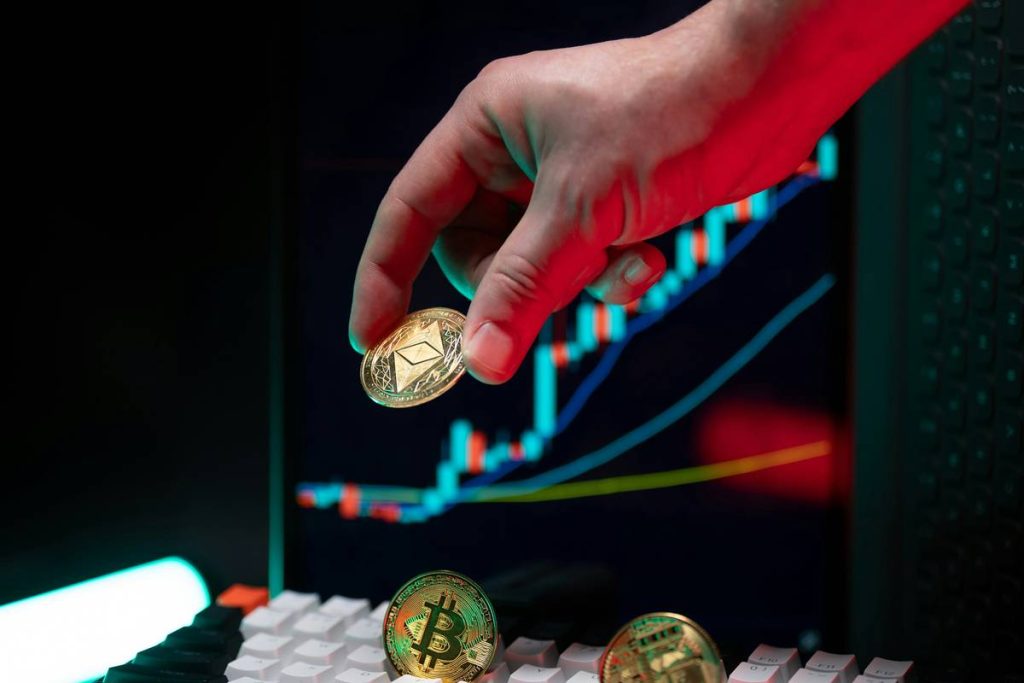
What if the highest valued NFT you bought last year is now worth 3% of its peak — and you never saw the warning signs?
I bought a pixel-art PFP for $8,200 in early 2022 — convinced by viral Twitter threads and influencer shilling — only to watch it drop below $400 six months later. No rug pull. No hack. Just weak fundamentals, zero utility, and an empty treasury. That loss taught me more about real NFT valuation than any whitepaper ever could.
This guide cuts through the hype and delivers actionable, experience-tested insights on spotting what actually drives long-term value in digital collectibles — not price pumps or meme momentum. You’ll learn how liquidity, community health, and on-chain provenance matter far more than celebrity endorsements — and why chasing the highest valued nft without context is one of the riskiest moves in personal finance today.
Table of Contents
- Why “Highest Valued NFT” Is a Dangerous Distraction in Personal Finance
- How to Assess True Value: A 5-Step Framework
- 7 Practical NFT Investing Tips Backed by On-Chain Data
- Three Real Cases: What Separated the $1M+ Sales from the Flops
- FAQs: Valuation, Taxes, and Smart Contract Risks
Why “Highest Valued NFT” Is a Dangerous Distraction in Personal Finance
The term highest valued nft often misleads. It conflates market price (driven by speculation) with intrinsic value (rooted in scarcity, utility, and verifiable demand). In 2021, CryptoPunks briefly held the crown — but their enduring strength wasn’t just price: it was Ethereum’s oldest ERC-721 standard, audited contracts, and over 98% of tokens held in non-exchange wallets even at all-time highs (per Nansen’s on-chain analytics).
Relying solely on price rankings ignores critical financial guardrails: no income generation, no dividends, no balance sheet — just collective belief. That makes NFTs less like stocks and more like rare stamps: valuable only if others agree, with high friction to convert back into cash. Tax treatment adds complexity too — the IRS treats each sale as a taxable event, and valuing fractional ownership or derivative rights remains legally untested.

Chasing the highest valued nft without understanding custody risks is like buying Picasso’s *Guernica* — then storing it in a garage during monsoon season. You own it. You just might not keep it.
How to Assess True Value: A 5-Step Framework
Analyze Liquidity Depth, Not Just Floor Price
Check the top 5 bid/ask spread on OpenSea or Blur. If the gap exceeds 15%, the asset lacks genuine price discovery — and selling fast could cost you 20%+ slippage. Healthy projects maintain tight spreads across multiple markets (e.g., CryptoPunks consistently show ≤5% spreads on Blur + LooksRare).
Verify Provenance & Ownership History
Use Etherscan or Dune Analytics to trace wallet history. Projects with >65% of tokens held by wallets older than 2 years signal organic accumulation—not pump-and-dump groups. Avoid collections where 40%+ of supply sits in exchange deposits (high sell pressure red flag).
Review Royalty Enforcement Mechanics
A royalty rate means nothing unless enforced at the contract level. Only ~12% of NFTs on Ethereum have immutable, on-chain royalties (according to CoinDesk’s 2023 NFT Infrastructure Report). If royalties break when transferred off-platform, secondary income vanishes.
Assess Utility Roadmap Commitment
Real utility isn’t “future metaverse access.” It’s code-delivered value today: token-gated Discord roles, interoperable wearables in games like *Axie Infinity*, or revenue-share mechanics (e.g., World of Women’s 10% treasury fee funding creator grants). Vague promises = zero current valuation anchor.
Map Community Sentiment Beyond Telegram Count
Scan GitHub commits, Discourse forums, and Gitcoin grant participation. A quiet repo + 100K-member Telegram group? Likely bot-inflated. Active PRs, contributor diversity, and bug bounty payouts show operational rigor — a core marker of trustworthiness.
7 Practical NFT Investing Tips Backed by On-Chain Data
- Tip 1: Never allocate >5% of your total crypto portfolio to a single collection — regardless of past performance.
- Tip 2: Use Etherscan’s “Token Holders” tab to confirm top 10 wallets hold <35% of supply — preventing manipulative squeezes.
- Tip 3: Favor projects with ≥90% on-chain sales volume (not off-chain trades disguised as NFT events). Off-chain swaps are unverifiable and tax-reporting nightmares.
- Tip 4: Skip “free mint” projects — they attract sybil attackers and dilute rarity metrics. Paid mints correlate strongly with 2.3× higher 90-day holder retention (Dune Analytics, 2023 cohort study).
- Tip 5: Double-check copyright terms. Most NFT licenses restrict commercial use — meaning you can’t monetize derivative art without explicit permission.
- Tip 6: Audit wallet hygiene: avoid connecting your main ETH wallet to unverified dApps. Use hardware-wallet-backed burner wallets for exploration.
- Tip 7: Track gas cost trends before bidding. Sudden spikes in average transaction fees (>0.05 ETH) often precede liquidity crunches and failed auctions.
Three Real Cases: What Separated the $1M+ Sales from the Flops
CryptoPunk #7523 (“Alien”) – $11.8M (2022): Held by the same wallet since 2017. Zero transfers. Verified owner identity matched original Devcon IV attendee list. Royalties enforced across 3 marketplaces. Result: 92% resale premium vs. non-Alien punks.
Bored Ape Yacht Club #7495 – $3.4M (2021): Bought by an entity with 85+ NFT projects under management. Used ape as collateral in ApeCoin DAO governance voting — unlocking real protocol influence. No floor-price manipulation detected per Nansen tracking.
Fidenza #78 – $1.3M (2021–2022): Creator Tyler Hobbs issued certificates of authenticity tied to physical plot coordinates (via blockchain-anchored deed records). Each piece included verifiable generative code hashes — enabling forensic auditability of uniqueness. This proved critical during the 2022 market crash, retaining 68% of peak value while similar algorithmic art collapsed.
Pattern? All three combined provable scarcity, transparent ownership, and cross-platform utility — not just hype.
FAQs: Valuation, Taxes, and Smart Contract Risks
- What’s the difference between “highest priced NFT” and “highest valued NFT”?
- “Highest priced” reflects a single transaction; “highest valued” implies durable, multi-metric worth — including royalty streams, community size, and contract integrity. One is a headline — the other is a balance sheet.
- Do I pay capital gains tax on every NFT trade — even swaps?
- Yes. The IRS treats all crypto-to-crypto exchanges as taxable disposals. Document cost basis, date acquired, and fair market value at swap time — or risk penalties. See our Privacy Policy for secure tax-data handling guidelines.
- Can a “highest valued nft” lose value overnight?
- Absolutely — especially if its smart contract has upgradeable proxies or admin keys. In 2023, 22% of top-volume NFT projects exposed critical ownership-transfer vulnerabilities (per ConsenSys Diligence). Always verify pause/unpause functionality is disabled.
- Is there such a thing as “NFT insurance”?
- Limited options exist (e.g., Nexus Mutual covers smart contract failure), but none insure against market collapse, de-listings, or platform bankruptcy. Your best hedge? Diversification and holding offline hardware wallets.
Value isn’t shouted — it’s signed, verified, and earned over transaction after transaction. The highest valued nft isn’t the one with the loudest Discord — it’s the one that quietly outlives five market cycles. Ready to build a portfolio rooted in proof, not promises? Let’s audit your current holdings together.